
for a home that loves you back
custom new additions in elk river mn
the twin cities top choice for new additions
More Space for you and your family To make memories in
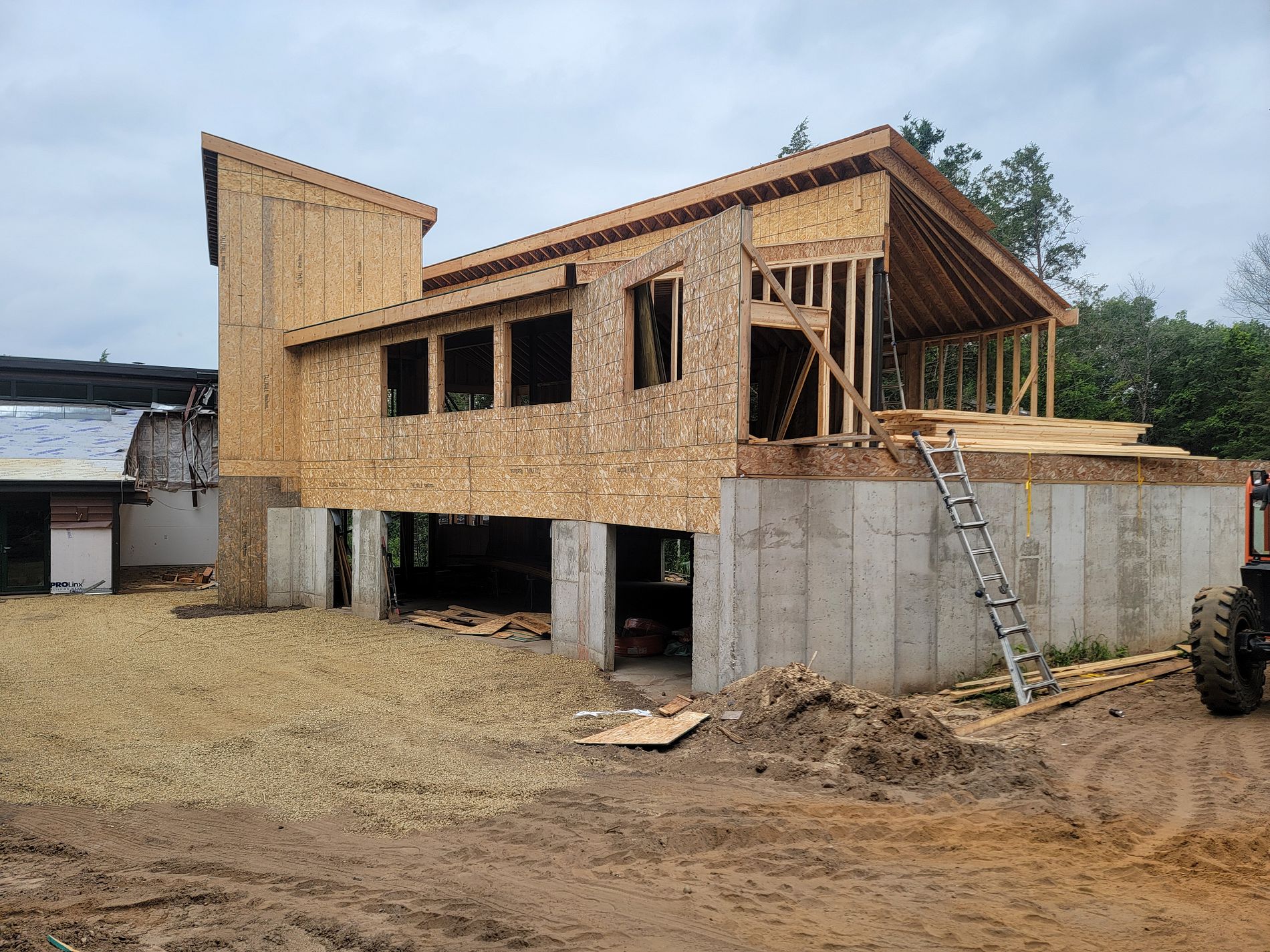
Most additions are judged on the finished room, the new kitchen, the extra bedroom, the expanded living space. But the part of the project that determines whether the addition feels like it belongs or feels tacked on happens before any of that is visible. The foundation has to be engineered for Minnesota's frost depth and soil conditions, with plans reviewed and approved by the City of Elk River before excavation even starts. The roofline has to tie into the existing roof in a way that sheds water correctly, not just looks connected from the street.
The framing has to account for how the addition's structure interacts with the existing house, including whether load bearing walls or floor joists need reinforcement to handle the new construction. Twin Cities Exteriors approaches additions as a single connected structure from the start, foundation, framing, roofline, siding, and windows all considered together, because an addition that's beautiful inside but doesn't tie into the house correctly outside is a problem that shows up later, often as a leak at the new roofline or a gap where the siding meets.
A Contractor Who Cares
Customer-obsessed construction for homeowners in the nw metro
We believe your home's exterior should perform as good as it looks. Functioning together as a beautifully-integrated system. This means your roof is much more than just shingles and plywood, and that a new addition has a deeper meaning than simply additional square footage. From looking to upgrade your old, faded vinyl siding, to expanding your summer grilling set-up with a brand new composite deck. Twin Cities Exteriors' 11 years of hands-on, industry specific experience, makes us the go-to provider for all things exteriors in the NW Metro.
timeline to add-on to your home
What Elk River Homeowners learn before breaking ground on their additions
In Elk River, additions require approved plans from the city before work begins, which means the permit process isn't something that gets handled in the background after a project starts. Plans have to meet Minnesota State Building Code requirements, be drawn to scale, and clearly show the scope of the work before they're submitted for review. Homeowners who understand this going in tend to have a much smoother process, because the early decisions, like foundation design and roofline approach, are the ones that have to be right before any of the later decisions can be made.
Types of Additions In Elk River Mn & The Surrounding Twin Cities
Single Story Additions: Expanding the home's footprint with new foundation, framing, and roofline work designed to integrate with the existing structure. This is the most common addition type for families needing more main floor living space without the structural complexity of building up.
Second Story Add-Ons: Sometimes you'd rather build up than out, which requires a structural evaluation of the existing foundation and framing to determine what reinforcement is needed before construction begins.
Mother-In-Law Suites and Smaller Expansions: For additions that don't require a full new foundation system, a bump out can add meaningful space, like an expanded kitchen or primary suite, with a smaller structural and permitting footprint.
Garage Additions: Finally building that She-Shed? Or man cave, depending on your style. Either way, attached garage additions involve the same foundation, framing, and roofline tie in considerations as living space additions, with the added complexity of coordinating the connection to the existing house envelope.
What Sets Twin Cities Exteriors AparT
Eleven Years Built on Minnesota Foundations: Since 2015, Twin Cities Exteriors has worked with the frost depth and soil conditions specific to this area. That matters most at the foundation stage, where mistakes are hardest to correct once the rest of the project is built on top of them.
Roofline Integration Planned From the Start: Where a new roof ties into an existing one is one of the most common places additions develop leaks. Twin Cities Exteriors plans that connection at the design stage, not as a problem to solve once framing is already underway and options are limited.
A Crew That Carries the Project Through: From permitted foundation to final exterior finishes, the same company stays involved through every stage. There's no point where one contractor's work has to be reinterpreted by the next, because it's the same crew throughout.
Because Your Home Deserves More than cookie-cutter
5 steps to your dream addition
Step 1: Foundation Design and Permitting
The City of Elk River requires approved plans before any addition work starts, and Twin Cities Exteriors handles the permit process as part of the project. The foundation gets designed for Minnesota's frost depth requirements, which run a minimum of 42 inches in this area, before a shovel touches the ground.
Step 2: Structural Review of the existing house
Twin Cities Exteriors evaluates whether the existing framing, including load bearing walls and floor joists, can support the new construction or needs reinforcement first. This step determines what the addition can realistically be before design decisions get locked in.
Step 3: Roofline Integration Planning
How the new roof ties into the existing one is planned at the design stage, not figured out once framing is underway. This connection point is one of the most common sources of leaks in additions when it's improvised rather than planned.
Step 4: Exterior finishes matched to the existing home
Siding, trim, and window selections are chosen to match or intentionally complement the existing exterior, so the addition blends naturally as part of your house rather than an obvious add on. Our siding process includes a color-match step specifically tailored to bringing continuity to your home.
Step 5: Final Inspection and Walk-through
Permitted addition work goes through inspection stages tied to foundation, framing, and final completion. Twin Cities Exteriors coordinates each inspection and walks through the finished space with the homeowner before calling the project done.
How Miuch Does A Home Addition IN Elk River COst?
The average cost to add-on to your runs between $190-$280 per square foot in Elk River and the surrounding areas, but after your initial consultation we will give you a specific, itemized plan to help you understand exactly where your money is being spent. It's important to understand that this is just a range, and the specific costs will vary based on existing foundation and the overall scope of your project. We built a custom cost guide for new addition projects in Elk River MN to help you plan for that basement finishing project, mother-in-law suite or whatever else your heart desires without worrying about going over budget!
What's the difference between a bump out and a full addition?
A bump out adds a smaller amount of space, often to expand a single room like a kitchen or primary suite, typically with a smaller foundation footprint than a full addition. A full addition adds significantly more square footage and usually involves a complete new foundation section, a larger framing scope, and more extensive roofline integration.
Can my home's existing foundation support a second story addition?
It depends on the age and condition of the existing foundation and framing. Many homes can support a second story with some reinforcement, while others may need more extensive foundation work first. A structural evaluation is the only way to know what a specific home can support before design decisions get locked in.
Will my new addition match the look of my existing home?
Matching siding, trim, and window styles to the existing exterior is part of the design process so the addition integrates visually rather than looking like a separate structure attached to the house. Twin Cities Exteriors handles siding and windows directly, so those selections get made by the same crew doing the structural work.
FAqs
Common questions Your Neighbors Are asking
Ready To Talk About Transforming Your Home?
Based in Elk river. built for the northwest metro.
Elk River MN
Otsego MN
Rogers MN
St Michael MN
Albertville MN
Monticello MN
Maple Grove MN
Plymouth MN
Corcoran MN
St. Paul MN

The Twin Cities' Trusted Exterior Contractor. Proudly Serving Elk River, MN and the surrounding NW Metro
MN License #BC810022
Copyright 2026. Twin Cities Exteriors. All rights reserved.